Flagler Jewish Community Gathers to Celebrate Purim on 75th Anniversary of the Completion of the Death Camp at Dachau!
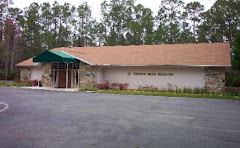
Flagler County’s Jews will gather at Temple Beth Shalom on Palm Coast’s Wellington Drive on Thursday evening, March 20th to celebrate the events described in the Biblical Book of Esther. On this day of the full moon in March, Jews the world over gather in synagogues to mark the salvation of the Jews from their annihilation planned by the wicked Haman in the fifth pre-Christian century in ancient Persia. An additional dimension comes into play this year as the synchronization of the Jewish lunar-solar calendar with the solar calendar now in more general use, brings Purim to fall on the 75th anniversary of the completion of the construction of the Nazi death camp at Dachau. As is the case some 24 centuries earlier, those who came to destroy Jews and Judaism have been defeated, but not without the payment of a terrible price.
Purim is one of the most joyous and fun holidays on the Jewish calendar. It commemorates a time when the Jewish people living in Persia were saved from extermination. The story of Purim is told in the Biblical Book of Esther. The heroes of the story are Esther, a beautiful young Jewish woman living in Persia, and her cousin Mordecai, who raised her as if she were his daughter. Esther was taken to the house of Ahasuerus, King of Persia, to become part of his harem. King Ahasuerus loved Esther more than his other women and made Esther queen, but the king did not know that Esther was a Jew, because Mordecai told her not to reveal her identity.
The villain of the story is Haman, an arrogant, egotistical advisor to the king. Haman hated Mordecai because Mordecai refused to bow down to Haman, so Haman plotted to destroy the Jewish People. In a speech that is all too familiar to Jews, Haman told the king, "There is a certain people scattered abroad and dispersed among the peoples in all the provinces of your realm. Their laws are different from those of every other people's, and they do not observe the king's laws; therefore it is not befitting the king to tolerate them." Esther 3:8. The king gave the fate of the Jewish people to Haman, to do as he pleased to them. Haman planned to exterminate all of the Jews.
Mordecai persuaded Esther to speak to the king on behalf of the Jewish people. This was a dangerous thing for Esther to do, because anyone who came into the king's presence without being summoned could be put to death, and she had not been summoned. Esther fasted for three days to prepare herself, then went into the king. He welcomed her. Later, she told him of Haman's plot against her people. The Jewish people were saved, and Haman was hanged on the gallows that had been prepared for Mordecai.
The book of Esther is unusual in that it is the only book of the Bible that does not contain the name of G-d. In fact, it includes virtually no reference to G-d. Mordecai makes a vague reference to the fact that the Jews will be saved by someone else, if not by Esther, but that is the closest the book comes to mentioning G-d. Thus, one important message that can be gained from the story is that G-d often works in ways that are not apparent, in ways that appear to be chance, coincidence or ordinary good luck.
Purim is celebrated on the 14th day of Adar, which is usually in March. The 13th of Adar is the day that Haman chose for the extermination of the Jews, and the day that the Jews battled their enemies for their lives. On the day afterwards, the 14th, they celebrated their survival. In cities that were walled in the time of Joshua, Purim is celebrated on the 15th of the month, because the book of Esther says that in Shushan (a walled city), deliverance from the massacre was not complete until the next day. The 15th is referred to as Shushan Purim.
The word "Purim" means "lots" and refers to the lottery that Haman used to choose the date for the massacre.
The Purim holiday is preceded by a minor fast, the Fast of Esther, which commemorates Esther's three days of fasting in preparation for her meeting with the king.
The primary commandment related to Purim is to hear the reading of the book of Esther. The book of Esther is commonly known as the Megillah, which means scroll. Although there are five books of Jewish scripture that are properly referred to as megillahs (Esther, Ruth, Ecclesiastes, Song of Songs, and Lamentations), this is the one people usually mean when they speak of The Megillah. It is customary to boo, hiss, stamp feet and rattle gragers (noisemakers) whenever the name of Haman is mentioned in the service. The purpose of this custom is to "blot out the name of Haman."
Dachau was a Nazi German concentration camp, and the first one opened in Germany, located on the grounds of an abandoned munitions factory near the medieval town of Dachau, about 16 km (10 miles) northwest of Munich . Completed on March 20, 1933, the camp opened in June and became the first regular concentration camp established by the coalition government of National Socialist (Nazi) NSDAP party Heinrich Himmler, Chief of Police of Munich, officially described the camp as "the first concentration camp for political prisoners."
Second of Three Pages
Dachau served as a prototype and model for the other Nazi concentration camps that followed. Its basic organization, camp layout as well as the plan for the buildings were developed by Kommandant Theodor Eicke and were applied to all later camps. He had a separate secure camp near the command center, which consisted of living quarters, administration, and army camps. Eicke himself became the chief inspector for all concentration camps, responsible for molding the others according to his model.
In total, over 200,000 prisoners from more than 30 countries were housed in Dachau of which nearly one-third were Jews.. Some 25,613 prisoners are believed to have died in the camp and almost another 10,000 in its subcamps, primarily from disease, malnutrition and suicide. In early 1945, there was a typhus epidemic in the camp followed by an evacuation, in which large numbers of the weaker prisoners died.
Together withthe much larger Auschwitz, Dachau has come to symbolize the Nazi concentration camps to many people. Konzentrationslager (KZ) Dachau holds a significant place in public memory because it was the second camp to be liberated by British or American forces. Therefore, it was one of the first places where the West was exposed to the reality of Nazi brutality through firsthand journalist accounts and through newsreels.
Among the goals of Nazism and the Holocaust that descended upon Europe from 1933 to 1945 was the destruction of the Jews and the event is foreshadowed by the story of Purim and the designs of the wicked Haman. Much is even made of the similarity between the names Hitler, Himmler and the biblical Haman.
But no matter the source of the destructive powers arrayed against the Jews, they remain and will gather in their synagogues, including Temple Beth Shalom of Palm Coast, on the eve of Purim, Thursday evening, March 20th. All are welcome to the celebration at Temple Beth Shalom on March 20th at 7 p.m. Costumes and noisemakers are a traditional part of the festivities. Noisemakers will be provided, costumes are optional. The hourlong service will be followed by traditional refreshements. There is no charge and no advance arrangements need be made.
Flagler County’s Jews will gather at Temple Beth Shalom on Palm Coast’s Wellington Drive on Thursday evening, March 20th to celebrate the events described in the Biblical Book of Esther. On this day of the full moon in March, Jews the world over gather in synagogues to mark the salvation of the Jews from their annihilation planned by the wicked Haman in the fifth pre-Christian century in ancient Persia. An additional dimension comes into play this year as the synchronization of the Jewish lunar-solar calendar with the solar calendar now in more general use, brings Purim to fall on the 75th anniversary of the completion of the construction of the Nazi death camp at Dachau. As is the case some 24 centuries earlier, those who came to destroy Jews and Judaism have been defeated, but not without the payment of a terrible price.
Purim is one of the most joyous and fun holidays on the Jewish calendar. It commemorates a time when the Jewish people living in Persia were saved from extermination. The story of Purim is told in the Biblical Book of Esther. The heroes of the story are Esther, a beautiful young Jewish woman living in Persia, and her cousin Mordecai, who raised her as if she were his daughter. Esther was taken to the house of Ahasuerus, King of Persia, to become part of his harem. King Ahasuerus loved Esther more than his other women and made Esther queen, but the king did not know that Esther was a Jew, because Mordecai told her not to reveal her identity.
The villain of the story is Haman, an arrogant, egotistical advisor to the king. Haman hated Mordecai because Mordecai refused to bow down to Haman, so Haman plotted to destroy the Jewish People. In a speech that is all too familiar to Jews, Haman told the king, "There is a certain people scattered abroad and dispersed among the peoples in all the provinces of your realm. Their laws are different from those of every other people's, and they do not observe the king's laws; therefore it is not befitting the king to tolerate them." Esther 3:8. The king gave the fate of the Jewish people to Haman, to do as he pleased to them. Haman planned to exterminate all of the Jews.
Mordecai persuaded Esther to speak to the king on behalf of the Jewish people. This was a dangerous thing for Esther to do, because anyone who came into the king's presence without being summoned could be put to death, and she had not been summoned. Esther fasted for three days to prepare herself, then went into the king. He welcomed her. Later, she told him of Haman's plot against her people. The Jewish people were saved, and Haman was hanged on the gallows that had been prepared for Mordecai.
The book of Esther is unusual in that it is the only book of the Bible that does not contain the name of G-d. In fact, it includes virtually no reference to G-d. Mordecai makes a vague reference to the fact that the Jews will be saved by someone else, if not by Esther, but that is the closest the book comes to mentioning G-d. Thus, one important message that can be gained from the story is that G-d often works in ways that are not apparent, in ways that appear to be chance, coincidence or ordinary good luck.
Purim is celebrated on the 14th day of Adar, which is usually in March. The 13th of Adar is the day that Haman chose for the extermination of the Jews, and the day that the Jews battled their enemies for their lives. On the day afterwards, the 14th, they celebrated their survival. In cities that were walled in the time of Joshua, Purim is celebrated on the 15th of the month, because the book of Esther says that in Shushan (a walled city), deliverance from the massacre was not complete until the next day. The 15th is referred to as Shushan Purim.
The word "Purim" means "lots" and refers to the lottery that Haman used to choose the date for the massacre.
The Purim holiday is preceded by a minor fast, the Fast of Esther, which commemorates Esther's three days of fasting in preparation for her meeting with the king.
The primary commandment related to Purim is to hear the reading of the book of Esther. The book of Esther is commonly known as the Megillah, which means scroll. Although there are five books of Jewish scripture that are properly referred to as megillahs (Esther, Ruth, Ecclesiastes, Song of Songs, and Lamentations), this is the one people usually mean when they speak of The Megillah. It is customary to boo, hiss, stamp feet and rattle gragers (noisemakers) whenever the name of Haman is mentioned in the service. The purpose of this custom is to "blot out the name of Haman."
Dachau was a Nazi German concentration camp, and the first one opened in Germany, located on the grounds of an abandoned munitions factory near the medieval town of Dachau, about 16 km (10 miles) northwest of Munich . Completed on March 20, 1933, the camp opened in June and became the first regular concentration camp established by the coalition government of National Socialist (Nazi) NSDAP party Heinrich Himmler, Chief of Police of Munich, officially described the camp as "the first concentration camp for political prisoners."
Second of Three Pages
Dachau served as a prototype and model for the other Nazi concentration camps that followed. Its basic organization, camp layout as well as the plan for the buildings were developed by Kommandant Theodor Eicke and were applied to all later camps. He had a separate secure camp near the command center, which consisted of living quarters, administration, and army camps. Eicke himself became the chief inspector for all concentration camps, responsible for molding the others according to his model.
In total, over 200,000 prisoners from more than 30 countries were housed in Dachau of which nearly one-third were Jews.. Some 25,613 prisoners are believed to have died in the camp and almost another 10,000 in its subcamps, primarily from disease, malnutrition and suicide. In early 1945, there was a typhus epidemic in the camp followed by an evacuation, in which large numbers of the weaker prisoners died.
Together withthe much larger Auschwitz, Dachau has come to symbolize the Nazi concentration camps to many people. Konzentrationslager (KZ) Dachau holds a significant place in public memory because it was the second camp to be liberated by British or American forces. Therefore, it was one of the first places where the West was exposed to the reality of Nazi brutality through firsthand journalist accounts and through newsreels.
Among the goals of Nazism and the Holocaust that descended upon Europe from 1933 to 1945 was the destruction of the Jews and the event is foreshadowed by the story of Purim and the designs of the wicked Haman. Much is even made of the similarity between the names Hitler, Himmler and the biblical Haman.
But no matter the source of the destructive powers arrayed against the Jews, they remain and will gather in their synagogues, including Temple Beth Shalom of Palm Coast, on the eve of Purim, Thursday evening, March 20th. All are welcome to the celebration at Temple Beth Shalom on March 20th at 7 p.m. Costumes and noisemakers are a traditional part of the festivities. Noisemakers will be provided, costumes are optional. The hourlong service will be followed by traditional refreshements. There is no charge and no advance arrangements need be made.