Unto Every Person There Is a Name: Public Recitation of Names of Holocaust Victims on Yom Hashoah
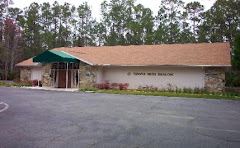
On Wednesday evening, April 30th beginning at 7 p.m. those gathered in the sanctuary at Temple Beth Shalom in Palm Coast will begin reading the names of victims of the Holocaust, those who died in the darkness that fell over Europe between 1933 and 1945. All are welcome to this event that is open to the public. Any one who wishes is welcome to join as readers recite and pronounce the names of the dead, 36 names at a time.
"Once a person dies and the mourning period is over, we rarely speak the names of people who have gone on to their reward," noted Temple Beth Shalom's Rabbi Merrill Shapiro. "This is the day set aside by Jews the world over, to remember those who perished, each of them individuals like all of us who had plans, dreams, aspirations and hopes. Instead of thinking about the unthinkable, 6 million dead, let us focus on just individuals and their names, names all too similar to our own!" the Rabbi added.
The worldwide Holocaust memorial project, called "Unto Every Person Is A Name," which was initiated in 1989, is a unique project designed to perpetuate the memory of the Jewish victims of the Shoah as individuals, by the public recitation of their names on Yom Hashoah - the Day of Remembrance. By personalizing the individual tragedy of its victims and survivors, this project seeks to defy dangerous trends of indifference and ignorance of World War II and the Holocaust. Six million Jews, of whom one and a half million were children, perished in the Shoah, while the world remained indifferent and failed to act. Today, while anti-Semitism has virtually been eliminated as a policy of the State, anti-Jewish attitudes and anti-Semitic manifestations still persist. Ceremonies during which names of Holocaust victims are recited, together with such information as age, place of birth and place of death, personalize the tragedy of the Holocaust. Emphasis is thus put on the millions of men, women and children who were lost to the Jewish people and not solely on the cold, intangibility embodied in the term "The Six Million." Through the recitation of individual names of victims of the Nazi genocide, "Unto Every Person There Is A Name" Yom Hashoah ceremonies help to educate and influence young people. Many have not met a survivor of the Holocaust and heard the personal experience of those who choose to share their experience to educate the youth of today. This program is also an effective tool to counter the efforts of Holocaust deniers who seek to convince the world that the Holocaust never occurred. It also serves to perpetuate the memory and respond to those who say that we should close this chapter in history. The Holocaust is a tragedy whose size defies comprehension: Six million Jews were killed. One and half million children. Billions of dollars in property were confiscated. Tens of thousands of books were destroyed. Thousand of Jewish communities were obliterated - forever. We read their names as a tribute to the lives they led and hoped to lead. "Unto Every Person There is a Name" gives names back to those who were stripped of their identities before they were robbed of their lives. By reciting their names, ages and birthplaces, we remember that each victim was an individual, a son or daughter, a sister or brother, a child or a parent. Each had hopes and dreams and, like all people, each clung to life. On Yom Hashoah, B'nai B'rith members throughout the world read some of the names of the six million Jewish men, women and children murdered during the Holocaust. Murdered, systematically and brutally, because they were born Jewish. We also recall non-Jews murdered because they, too, did not fit into Hitler's perverse vision. We, the living, bear witness today - not just at these commemorations but as a united observance in communities around the world. Together we affirm that the innocent lives lost in the Holocaust have not and will not be forgotten. Their names will always be remembered.
Unto Every Person There is a Name
"We were first told to undress - clothes on one side, shoes on other - then we entered the room, naked as the day of our birth. It was here that we were given a number and heard the Konzentrationlagerfuehrer [Concentration Camp Commandant] say: 'Fromthis day forth, you are all numbers. You no longer have names. You have no identities. You have no nationalities. All you haveis your number, and besides your number, you have nothing at all.'
Excerpt from the diary of Jacob, 17
Since 1955, Yad Vashem, the Holocaust Martyrs' and Heroes Remembrance Authority has been gathering the names of the victims of the Holocaust. Lists of deportees, inmates of concentration camps, Jews who lived in ghettoes and persons displaced after the war have been collected and stored. But the information contained in these lists was usually limited to name, date and place of origin. It was therefore decided to create "Pages of Testimony", to be filled by family members, friends or acquaintances of persons who had disappeared, or had been murdered by the Nazis and their collaborators. Data about the victim's family, his/her occupation, whereabouts during the war and the circumstances of his/her disappearance or death personalizes the tragedy of the intangible and anonymous "Six Million", says Alexander Avraham, Director of the Hall of Names at Yad Vashem.
By the end of the 1990s, some 800,000 Pages of Testimony had been collected, including tens of thousands of pages filled by immigrants from the former Soviet Union. But Avraham realized that time was running out.
Shortly before Holocaust Martyrs' and Heroes' Remembrance Day in April 1999, Yad Vashem launched an international $1 million campaign entitled "Unto Every Person there is a Name". The aim was to collect the names of every man, woman and child killed during the Holocaust. The Nazis had taken away the names of their victims and replaced them with numbers; the project was to return their identities and commemorate them.
The response was overwhelming. More than 380,000 new testimonies have been submitted to date. Avraham credits much of the response to its timing. In the initial post-war years, he explains, survivors found the topic very difficult to address, or still clung to the belief that their loved ones had somehow survived. Others found the task of giving testimony, often concerning dozens of relatives and friends too daunting; some were simply too involved with rebuilding their shattered lives. As a result, relatively few Pages of Testimony arrived at Yad Vashem.
Today the climate has changed. In the past few years, the Holocaust has become a topic discussed worldwide, especially in the area of restoration of property. Also, members of the survivors' generation, now very advanced in years, have realized that this may be their last chance to formally record the fate of their relatives and friends.
An interesting phenomenon that has come to light in the course of the campaign is the special relationship between survivors and their grandchildren. Often, Alexander relates, survivors couldn't face telling their children about their experiences and the "second generation" grew up in an atmosphere of silence and grief. This silence was broken many years later, when grandparents told their stories to their grandchildren. An example of third-generation involvement is the case of 14-year-old Ron Haber from New Zealand. Ron was so moved by his visit to Yad Vashem a year ago that he took back home with him Pages of Testimony for his grandfather, a Hungarian-born Holocaust survivor, to fill. Ron's initiative came not a moment too soon, as his grandfather passed away several months later. In his memory, Ron, together with a teacher and some classmates, collected testimonies from all the Holocaust survivors in New Zealand - some 300 Pages of Testimony - and forwarded them to Yad Vashem.
Other private initiatives were taken by: a German priest and teacher who made it a class project to gather the names of Jews from their town who were killed during the Holocaust; and twelve-year-old Ben Wind from Texas, who wrote to Yad Vashem asking for 200 blank Pages of Testimony which he filled completed and returned in person when he came to celebrate his Bar-Mitzvah in Jerusalem later that year. The National Students' Union of Israel has pledged itself to the operation, and recruited dozens of students to help survivors fill out Pages of Testimony. Over 1,000 Pages were collected in this way from survivors now living in retirement homes in Israel. Abroad, Jewish organizations, community centers, newspapers and Israel's embassies have assisted local Yad Vashem societies with the project. However, only ten percent of the testimonies have come from outside of Israel, and Avraham believes that the project is still in need of more publicity abroad.
The Pages are made of special acid-free paper, and are available from Yad Vashem, by mail or e-mail in fourteen languages. Both sections (concerning the victim and the survivor) must be filled out, each form for one victim only (not groups or families) and the information must be about a victim of the Holocaust, not - albeit a tragedy - someone who perished in a pogrom before the war, a survivor who was killed after arrival in Israel, or an allied soldier killed in battle. There is a space on the form for a photograph of the victim; some four to five percent of the testimonies submitted have photos attached. Incomplete or photocopied forms are accepted, but only if they are signed and dated by hand, since they are considered legal documents.
In 1992, a comprehensive computer program was initiated, which facilitated access to the huge reservoir of information already collected. The program can also translate place names and personal names into different languages, which allows for quicker cross-referencing and identification of duplicate entries. This is vital since some 16 million names appear on the thousands of lists that Yad Vashem has obtained, and which contain multiple references to many people, as they were transferred from place to place. The program thus enables relatives to find out where their loved ones spent their last months, and where they died. Alexander hopes that one day this service will be available on the Internet.
A staff of 25 checks the completed pages on arrival at Yad Vashem. After being scanned into the computer, the Pages are placed in alphabetical order in memorial files - symbolic tombstones - in the Hall of Names, which is kept at a temperature and level of humidity necessary for their preservation. Next to the Hall is a room where visitors can use the five computer terminals to search for information about lost relatives and friends.
Searches at times turn up unexpected results. In 1941, Leonid Sheiman was separated from his family - parents, four brothers and a sister - and was drafted into the Soviet army. His efforts after the war to find members of his family were all in vain. In June 2000, five years after he immigrated from Poland, Leonid's daughter encouraged him to write to Yad Vashem. Researchers were able to tell him that in 1991, his brother Lazar, who had arrived in Israel in 1957, had filed Pages of Testimony regarding his family - including Leonid - all of whom he believed to be dead. After 59 years, the two brothers were reunited.
Altogether, the program contains some five million individual references. Avraham does not believe that all six million names will ever be collected: the biggest "hole", he explains, is Central Europe, where people were murdered where they lived - thus their names do not appear on any official lists - and where so few survived to give testimony.
By personalizing the individual tragedy of the victims and the survivors of the Holocaust, the project seeks to counteract trends of indifference and ignorance, and to discredit Holocaust deniers who seek to convince the world that the Holocaust never happened.
"With each name added," Alexander believes, "the memory of a whole life is revived. Every new name recorded in the Hall of Names is a victory against oblivion."
Unto Every Person There is a NameUnto every person there is a namebestowed on him by Godand given to him by his parents.Unto every person there is a nameaccorded him by his statureand type of smileand style of dress.Unto every person there is a nameconferred by the mountainsand the walls which surround him.Unto every person there is a namegranted him by Fortune's wheelor that which neighbors call him.Unto every person there is a nameassigned him by his failingsor contributed by his yearnings.Unto every person there is a namegiven to him by his enemiesor by his love.Unto every person there is a namederived from his celebrationsand his occupation. Unto every person there is a namepresented him by the seasonsand his blindness.Unto every person there is a namewhich he receives from the seaand is given to him by his death.
Zelda
Showing posts with label Palm Coast. Show all posts
Showing posts with label Palm Coast. Show all posts
Tuesday, April 15, 2008


Friday, March 21, 2008
Preparing for Passover, Beth Shalom Promotes Israel Wineries


As the season begins for preparations for the traditional observance of the ancient Passover Festival, Palm Coast’s Temple Beth Shalom Men’s Club and Sisterhood are promoting the purchase of the produce of Israel’s wineries by offering bottles of Galilean wine in response to donations of $18.75 or more! The project is designed to encourage the purchase of products from Israel to strengthen the economy of the Middle East’s only genuine democracy and steadfast American ally.
Wine is an essential ingredient to the celebration of Passover, based upon the promises made to the ancient Hebrews in the sixth chapter of the biblical Book of Exodus. The centrality of the use of wine at Passover is verified by the Gospel accounts of the ritual used by Jesus at the Last Supper.
Temple Beth Shalom has made available in Flagler County, wines from the vineyards of the Galilee or Northern Israel region. This region is most suited for viniculture in Israel due to its high elevation, cool breezes, marked day and night temperature changes and rich, well-drained soils (most suitable for Cabernet Sauvignon, Merlot, Sauvignon Blanc and Chardonnay).
Wine has been produced in the Land of Israel since Biblical times. The ancient land of Israel (known at various times as Canaan and Judea) was making wine over two thousand years before Europe. In Biblical times the wine industry was the mainstay of the economy and wine had significant ritual importance.
The city of Gibeon was the center of wine making in ancient Israel. In 1959 and 1960 archaeological expeditions discovered ancient wine cellars saved and preserved at temperatures of 20 degrees Celsius. Furthermore it has been determined that wine was made and stored in ancient Gibeon between 600 C.E and 700 C.E. Great similarities between the wine cellars of Gibeon, Israel and Champagne, France have been noted, as if the same architect was involved in the design and building of the wine cellars despite the fact that the cellars of Gibeon were built 500 years earlier than the cellars of Champagne, France.
Ancient wines lacked the quality that people have become accustomed to in modern times. They were thick and sweet and had to be seasoned just to make them palatable.
Baron Edmond de Rothschild built two wineries in the final decades of the nineteenth century, one in Zikhron Ya'aqov and another in Rishon LeZion. Because of high temperatures the wine of the first vintages went sour, so deep underground cellars were constructed at enormous cost.
In 1906 Rothschild passed the management of the wineries onto the growers who formed the Societe Co-operative Vigneronne des Grandes Caves and in 1957 his son, James Rothschild, donated the wineries to the wine growers cooperative. Their vineyards covered many parts of Israel, but the main concentration was in the coastal regions of Sharon & Samson. The resulting wines were sold under the brand name 'Carmel'.
At the turn of the twentieth century Carmel produced the first Israeli wine to win a medal at a wine show (Carmel No. 1 1900 was a gold medal winner at the Paris World's Fair). It signaled It signaled the rebirth of the Israeli wine industry after 2,000 years.
Well into the 1960s, Israel suffered from a reputation of producing wines too thick and sweet to appeal to true wine connoisseurs. In the 1970s Carmel began to produce Israel's first varietal wines (Cabernet Sauvignon & Sauvignon Blanc).
Today, some Israeli wines are so good that they are compared favorably to the wines of the respected chateaux of France. Starting in the 1990s and continuing in the 2000s there has been an explosion of new boutique wineries throughout Israel. The most famous of these is Domaine du Castel, situated in the Judean Hills, west of Jerusalem. Castel wines were chosen as Decanter Wine of the Month on no less than three occasions.
Israel wins most prizes for its red wines, in particular Cabernet Sauvignon, but awards have been won for traditional method sparkling wines, white wines & dessert wines too. Eleven different Israeli wineries have won gold medals at the very highest level of international blind tasting wine competitions at least once, and some are regular winners.
Temple Beth Shalom is proud to present fine Israeli wines to the sophisticated consumers of Flagler County and to support the produce of the Holy Land. Robert Arkin, President of the synagogue’s Men’s Club is quick to point out that “great festivals like Passover, require great wine from a great and holy land, an ancient land made new again in our own time through the modern State of Israel!”
Tuesday, January 22, 2008
Temple Beth Shalom Adopts a Road


City of Palm Coast's John Harney Installs Sign Indicating
Temple Beth Shalom's Adopt A Road
The Palm Coast Adopt-A-Road program is a litter reduction campaign designed to remove liter and debris from city thoroughfares and improve the quality of the local and regional environments. The program has established a partnership between the City of Palm Coast and Temple Beth Shalom to keep a mile of Pine Lakes Parkway free of litter, attractive and environmentally sound. Temple Beth Shalom, representing the Jewish community of the area has welcomed the opportunity to contribute to community beautification and earn recognition for a job well done.
Beth Shalom has an important interest in saving taxpayer dollars, raising public awareness of the costs of littering, improving the environment, promoting civic responsibility and pride and providing assistance to the governmental agencies responsible for litter clean up. Every day, the City of Palm Coast strives to meet and exceed the needs and expectations of residents and business in our community while respecting and appreciating the environment. Keeping local roads free of garbage and debris is one of many ways a house of worship can contribute to the shared vision of creating a healthy community.
It is well understood that garbage and debris or roadside litter is unappealing to the eye for residents, motorists, guests, visitors and tourists as well as harmful to the environment, obscuring Palm Coast’s natural beauty. Roadside litter can be harmful to animals that consume it, plug or block water drainage systems and present safety concerns for both drivers and pedestrians.
Wednesday, January 16, 2008
Palm Coast Transitions Explained by Mayor Netts at February 10th Temple Breakfast

In just the past 90 days, five Palm Coast city officials have assumed new offices, Vice-Mayor Alan Peterson, re-elected City Council Member Mary DiStefano and two new Council Members, Holsey Moorman and Frank Meeker as well as Mayor Jon Netts who will be the guest speaker at a Temple Beth Shalom Men’s Club Breakfast open to the public on February 10th at 10 a.m. at the congregation’s Wellington Drive synagogue. All are welcome, advance reservations are encouraged but not required. The event includes a sumptuous breakfast for $10 each adult while there is no charge forchildren under the age of 18.
Mayor Jon Netts serves as a Director of the Palm Coast Historical Society; as a Director of Enterprise Flagler, and on the Executive Board of Flagler Habitat for Humanity. He has served as Chairman of the Flagler County's "Citizen Advisory Committee on School Impact Fees" and on the "Flagler County Blue Ribbon Landfill Advisory Committee." He is a graduate of "Leadership Flagler." In November, 2006 Mr. Netts was appointed by Gov. Jeb Bush to the Northeast Florida Regional Planning Council.
The Men’s Club of Temple Beth Shalom has been established to serve the Palm Coast community, enrich the spiritual life of neighbors both near and far. The Men’s Club seeks to create a sense of fellowship and warmth among people of all ages. The Men’s Club of Temple Beth Shalom enjoys the fellowship and kinship that derive from a variety of activities such as celebrating holidays together, laughing together and studying together. Members have found a home away from home where friendly people are always eager and willing to help couples, single parent families, senior adults, interfaith marrieds and newcomers to our community. The Men’s Club makes Temple Beth Shalom, the center of Jewish life in Flagler County, a place where everyone counts!
Tuesday, January 8, 2008
Palm Coast Students Complete Read Hebrew America/Canada Course


Ten Flagler County students were caught up in the National Jewish Outreach Program’s Read Hebrew American event, one of over a 1000 classes across the continent reaching more than 12,000 students intent on acquiring access to the ancient Hebrew documents that guide western civilization. The ten, meeting at Temple Beth Shalom on Thursday evenings, were part of a mega Hebrew literacy campaign that invited thousands of Jewish adults into community institutions to create awareness of the importance of Hebrew literacy. In just five 90 minute sessions, students were given the key to reading with beginning level comprehension the language of the Bible and of a myriad of historical documents dating back 2,500 years.
The National Jewish Outreach Program is an adult education and outreach organization founded in 1987 by Rabbi Ephraim Buchwald, a leading American rabbi then serving at the Lincoln Square Synagogue in midtown Manhattan, New York City. The program’s aim is to address issues of Hebrew and Jewish literacy.
Temple Beth Shalom is the center of Jewish communal life in Flagler County. Founded 35 years ago, the congregation has grown reflecting the growth of Palm Coast. Beth Shalom sees itself as an educational institution intent on fostering the understanding of traditional Judaism, its customs, ceremonies and traditions among both Jews and non-Jews in the region.
Wednesday, September 5, 2007
Beth Shalom Students Become Proficient Ba'alei Tekiah!


The Temple Beth Shalom Religious School is spearheading the movement for "hands-on" education and teaching students to become proficient Ba'alei Tekiah, sounders of the Shofar, the ram's horn used during High Holy Day worship. Students have been trained on shofarot from both the Ashkenazic and Sephardic traditions.
The shofar is an instrument made from the horn of a ram or other kosher animal. It was used in ancient Israel to announce the New Moon, called Rosh Chodesh and call people together. It was also blown on Rosh Hashannah, marking the beginning of the New Year, signifying both need to wake up to the call to repentance, and in connection with the portion read on the second day of Rosh Hashanah, the Binding of Isaac (Genesis, Chapter 22) in which Abraham sacrifices a ram in place of his son, Isaac.
Today, the shofar is featured most prominently in the Rosh Hashanah morning services. It is considered a commandment to hear the shofar blown.
There is a great deal of symbolism tied in with the legal requirements for what constitutes a proper shofar. The shofar of Rosh Hashanah, whose purpose it is to rouse the Divine in the listener, may not be constructed of an artificial instrument. It must be an instrument in its natural form and naturally hollow, through whom sound is produced by human breath, which God breathes into human beings. This pure, and natural sound, symbolizes the lives it calls Jews to lead. What is more, the most desirable shofar is the bent horn of a ram. The ram reminds one of Abraham's willing sacrifice of that which was most precious to him. The curve in the horn mirrors the contrition of the one who repents.
In the Talmud, we read: Rabbi Abbahu said:
Why do we sound the shofar? Because the Holy One, blessed be God, said: Blow me a ram's horn that I may remember to your credit the binding of Isaac, the son of Abraham, and I shall account it to you as a binding of yourselves before Me. The Torah tells us: Abraham look up and behold, he saw a ram caught in the thicket by its horns (Genesis22:13). This teaches us that the Holy One, blessed be God, showed our ancestor Abraham the ram tearing himself free from one thicket and becoming entangled in another. Said the Holy One, blessed be God, to Abraham: Thus are your children destined to be caught in iniquities and entangled in misfortunes, but in the end they will be redeemed by the horns of a ram. Therefore the prophet Zechariah said of the time of redemption: And the Lord shall be seen over them, and his arrow shall go forth like the lightning; and the Lord God shall blow the shofar, and shall move in stormy winds of the south (Zechariah 9:14). (Babylonian Talmud Tractate Rosh Hashanah 16a)
According to Leo Rosten, “The bend in the shofar is supposed to represent how a human heart, in true repentance, bends before the Lord. The ram's horn serves to remind the pious how Abraham, offering his son Isaac in sacrifice, was reprieved when God decided that Abraham could sacrifice a ram instead. The man who blows the shofar is required to be of blameless character and conspicuous devotion; he must blow blasts of different timbre, some deep, some high, some quavering.”
Thus has the Religious School at Temple Beth Shalom in Palm Coast connected the youth of the congregation to the most ancient of traditions. Bringing new into contact with the ancient traditions of the People Israel is also a fundamental objective of the school.
Subscribe to:
Posts (Atom)