Showing posts with label Jewish. Show all posts

Tuesday, January 8, 2008

Yad B'Yad Teens Celebrate Chanukah at Shapiro Home


As the move to use the synagogue as the setting for more and more Jewish rituals gains momentum, the People of the Book tend to loose sight of the fact that the equivalent of a church in Judaism, the main source of religious observance, is not the sanctuary but rather the Jewish home. Many Jews try to move their religious observances into the synagogue while the desired outcome that most strengthens Jewish identity and commitment is the move of rituals from the synagogue into the home.


With this in mind, Yad B'Yad teens of the Flagler County Jewish community gathered in a home, the home of Robyn and Rabbi Merrill Shapiro to celebrate Chanukah with traditional foods, games and rituals.


The students enjoyed a meal of potato latkes with applesauce and sour cream and some just old plain "down time" to sit and enjoy each other, to talk and strengthen their connections.

Sdeh Shalom Program Brings Afternoon Worship to Flagler County


As the sun began to set in the western sky, 17 members of the local Jewish community gathered to take a moment out to acknowledge the presence of the Almighty in northwest Flagler County. Temple Beth Shalom is offering an afternoon Mincha service each and every Tuesday at 5:30 p.m. at the congregation’s Sdeh Shalom site on Old Kings Road, just north of Matanzas High School. All are welcome to attend. Mincha is an oasis of spiritual time in a tough day, a moment of calming nerves and focusing on priorities.
Jews are bidden to pray three times daily to God. The Shacharit prayer takes place in the morning. It is the longest of the three daily prayers and contains within it the basic affirmations of Judaism -- the Shema, the Amidah and the ideas of repentance, self-improvement and loyalty to God and Israel.
The Maariv prayer takes place at night, after sunset. It is much shorter in length than Shacharit, but nevertheless includes again within it the basic Shema and Amidah prayers.
The shortest prayer service of the day takes place in the afternoon, or at least just before sunset, and is called Mincha. It is composed of the recitation of Psalm 145, the Amidah, a prayer of repentance and the concluding prayer to all Jewish prayer services, Aleynu. Aleynu is a reaffirmation of Jewish goals and a hope for the better world for all humankind.
Mincha is usually a 10-to-15-minute prayer service, but for much of the Jewish world, it has become almost a forgotten prayer service. It is not the length of Mincha that has caused this, but rather its inconvenience in coming in the middle of a busy working afternoon. But in that fact alone lies perhaps its major importance and necessity.
IN THE FIELD
Our Sages attribute the origin of our three daily prayer services to our patriarchs, Abraham, Isaac and Jacob. Abraham created the prayer time for Shacharit, Isaac for Mincha and Jacob for Maariv.
The rabbis of the Talmud deduced the role of Isaac in creating Mincha from the verse in the Torah that tell us that "Isaac went out to converse in the field" (Genesis 24:63-65). Converse with who? The Torah itself is silent on the subject. The rabbis are of the opinion that the conversation was between Isaac and God. And since the Torah describes this event as happening "before evening," Jewish tradition placed the time of Mincha as being in the afternoon before the time of the sun setting.
Mincha is also connected with being "in the field." Shacharit and Maariv are possible to be prayed outside of the time constraints of our mundane everyday tasks. Not so Mincha. It stops us in the middle of work, shopping, school, and all other usual tasks that life places upon us. It meets us "in the field," at our desks and in our factories -- and it is always inconvenient. But it is an oasis of spiritual time in a tough workday, a moment of contemplation, a calming of nerves and a focusing of priorities. As such, it is perhaps the most important and meaningful prayer service of the day.
NEIGHBORHOOD GROUPS
Today, there are many "Mincha" prayer groups in companies, stores, colleges, hospitals and in geographic areas of cities where a considerable number of observant Jews are to be found.
A lawyer many decades ago in downtown Chicago, observes that there were few if any such "Mincha" prayer groups. He would lock myself in his office, tell his secretary that he was making an important private call, and pray. (Yes, he was placing a personal call to the Almighty.) . Many times he felt a sense of rejuvenation and exhilaration after this 15-minute prayer break. It helped him to overcome the disappointments and frustrations that are the daily lot of all of us at our places of work.
What is lacking in much of current Jewish life, even amongst those who are nominally affiliated with synagogues or Jewish organizations, is a sense of personal participation in Judaism, its rituals, values and blessings. There are members but not participants. No sermon, article, book, class, etc. can connect one to being truly Jewish and feeling so in one's inner soul to the extent that a simple Mincha prayer in the midst of a busy afternoon at the office can.
Mincha becomes a major component of experiencing spirit and holy transcendence in daily human life. It can literally change the way we think about people, the world, life, ourselves

Monday, October 8, 2007

Sukkah Builders of All Ages Gather At Beth Shalom


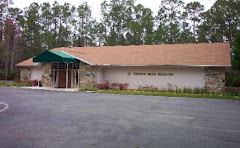
The creation of the traditional Sukkah at Temple Beth Shalom was a "hands-on" experience for builders of every age! On the Sunday following Yom Kippur the faithful gathered to assemble the framework, complete the walls and cover the roof with sekhakh, the covering of vegetation that leaves Sukkah dwellers able to count the stars through the roof yet have half the floor in shade during the heat of the day.


The Torah tells us "You will dwell in booths for seven days; all natives of Israel shall dwell in booths" (Leviticus 23:42). In honor of the holiday's historical significance, we are commanded to dwell in temporary shelters, as our ancestors did in the wilderness. The temporary shelter is referred to as a sukkah (which is the singular form of the plural word "sukkot"). Like the word sukkot, it can be pronounced like Sue-KAH, or to rhyme with Book-a.


The sukkah is great fun for the children. Building the sukkah each year satisfies the common childhood fantasy of building a fort, and dwelling in the sukkah satisfies a child's desire to camp out in the backyard. The commandment to "dwell" in a sukkah can be fulfilled by simply eating all of one's meals there; however, if the weather, climate, and one's health permit, one should spend as much time in the sukkah as possible, including sleeping in it.


A sukkah must have at least two and a half walls covered with a material that will not blow away in the wind. Why two and a half walls? Look at the letters in the word "sukkah!" One letter has four sides, one has three sides and one has two and a half sides. The "walls" of the sukkah do not have to be solid; canvas covering tied or nailed down is acceptable and quite common in the United States. A sukkah may be any size, so long as it is large enough for you to fulfill the commandment of dwelling in it. The roof of the sukkah must be made of material referred to as sekhakh (literally, covering). To fulfill the commandment, sekhakh must be something that grew from the ground and was cut off, such as tree branches, corn stalks, bamboo reeds, sticks, or two-by-fours. Sekhakh must be left loose, not tied together or tied down. Sekhakh must be placed sparsely enough that rain can get in, and preferably sparsely enough that the stars can be seen, but not so sparsely that more than ten inches is open at any point or that there is more light than shade. The sekhakh must be put on last. Note: You may put a water-proof cover over the top of the sukkah when it is raining to protect the contents of the sukkah, but you cannot use it as a sukkah while it is covered and you must remove the cover to fulfill the Mitzvah, the commandment, of dwelling in a sukkah.


It is common practice, and highly commendable, to decorate the sukkah. In the northeastern United States, Jews commonly hang dried squash and corn in the sukkah to decorate it, because these vegetables are readily available at that time for the American holidays of Halloween and Thanksgiving. Many families hang artwork drawn by the children on the walls. Building and decorating a sukkah is a fun family project, much like decorating the Christmas tree is for Christians. It is a sad commentary on modern American Judaism that most of the assimilated Jews who complain about being deprived of the fun of having and decorating a Christmas tree have never even heard of Sukkot.


Many Americans, upon seeing a decorated sukkah for the first time, remark on how much the sukkah (and the holiday generally) reminds them of Thanksgiving. This may not be entirely coincidental: I was taught that our American pilgrims, who originated the Thanksgiving holiday, borrowed the idea from Sukkot. The pilgrims were deeply religious people. When they were trying to find a way to express their thanks for their survival and for the harvest, they looked to the Bible for an appropriate way of celebrating and found Sukkot. This is not the standard story taught in public schools today (that a Thanksgiving holiday is an English custom that the Pilgrims brought over), but the Sukkot explanation of Thanksgiving fits better with the meticulous research of Mayflower historian Caleb Johnson, who believes that the original Thanksgiving was a harvest festival (as is Sukkot), that it was observed in October (as Sukkot usually is), and that Pilgrims would not have celebrated a holiday that was not in the Bible (but Sukkot is in the Bible). Although Mr. Johnson claims that the first Thanksgiving was "not a religious holiday or observance," he apparently means this in a Christian sense, because he goes on to say that the first Thanksgiving was instead "a harvest festival that included feasts, sporting events, and other activities," concepts very much in keeping with the Jewish religious observance of Sukkot.


The Temple Beth Shalom Religious School endeavors to avoid separating students from the holidays of Jewish people. Religious School students were very much a part of the Sukkah building process.

Monday, July 30, 2007

First US Jewish Charter School in Broward County

First Jewish charter school in U.S. approved
The Broward County School Board in South Florida approved two measures July 24 that effectively give a green light to the nation's first Hebrew-language charter school. Set to open Aug. 20 in Hollywood, Fla., the Ben-Gamla Charter School will be operated by a private company, Academica, under the direction of Adam Siegel, an Orthodox rabbi who formerly headed Yeshiva Elementary School in Miami Beach.
Even though Siegel and the school's main backer, former U.S. Rep. Peter Deutsch, insist that Ben-Gamla will not teach Judaism, the school has nevertheless generated enormous controversy within South Florida's Jewish community over the separation of church and state.
"The opposition of some Jewish day schools comes about because until now, they have effectively been a monopoly in terms of delivering Hebrew-English education in Broward County, and they feel that their monopoly status is being threatened," Deutsch told JTA.
Rabbi Allan Tuffs of Temple Beth-El in Hollywood counters that the objections are not about money or power. "Nobody's got a problem with teaching modern Hebrew," he said. "What I'm worried about is that if Ben-Gamla succeeds, every religious group in America will want to have their own segregated, religious school funded with public money."
The measures approved Tuesday night at a meeting attended by hundreds of parents involve changes to Ben-Gamla's curriculum and its use of a building in Hollywood that can accommodate up to 430 students. Both the Anti-Defamation League and the Jewish Federation of Broward County have expressed concern about the new school, though Broward County School Board officials insist that Ben-Gamla is not at all religious.