Tuesday, May 19, 2009

Beth Shalom School Students follow 2nd Century Rabbi Akiba


Temple Beth Shalom Religious School students, with their educational director Robyn Shapiro, took to the outdoors, just as the students of Rabbi Akiba did around 110 in the Common Era, to celebrate Lag B'Omer, the thirty-third day of the counting of the barley harvest and the days between Pesach and Shavuot.


The explanations begin with the Omer period itself, those forty-nine days that are counted off one by one between the two festivals. This is a time of semi-mourning, when weddings and other celebrations are forbidden, and as a sign of grief, observant Jews do not cut their hair.
Anthropologists say that many peoples have similar periods of restraint in the early spring to symbolize their concerns about the growth of their crops. But the most often cited explanation for the Jewish practice comes from the Talmud, which tells us that during this season a plague killed thousands of Rabbi Akiva's students because they did not treat one another respectfully. The mourning behavior is presumably in memory of those students and their severe punishment.
According to a medieval tradition, the plague ceased on Lag Ba'Omer, the thirty-third day of the Omer. (The Hebrew letters lamed and gimel which make up the acronym "Lag" have the com­bined numerical value of 33.) As a result, Lag Ba'Omer became a happy day, interrupting the sad­ness of the Omer period for twenty-four hours.
The talmudic explanation makes most sense when put into historical context. The outstand­ing sage Rabbi Akiva became an ardent supporter of Simeon bar Koseva, known as Bar Kokhba, who in 132 C.E. led a ferocious but unsuccessful revolt against Roman rule in Judea. Akiva not only pinned his hopes on a political victory over Rome but believed Bar Kokhba to be the long-awaited Messiah. Many of his students joined him in backing the revolt and were killed along with thousands of Judeans when it failed. The talmudic rabbis, still suffering under Roman rule and cautious about referring openly to past rebellions, may have been hinting at those deaths when they spoke of a plague among Akiva's students. Possibly, also, Lag Ba'Omer marked a respite from battle, or a momentary victory.
A completely different reason for the holiday concerns one of Rabbi Akiva's few disciples who survived the Bar Kokhba revolt, Rabbi Simeon bar Yohai. He is said to have died on Lag Ba'Omer.
Rabbi Simeon continued to defy the Roman rulers even after Bar Kokhba's defeat, and was forced to flee for his life and spend years in solitary hiding. Legend places him and his son Eleazar in a cave for twelve years, where a miraculous well and carob tree sustained them while they spent their days studying and praying. When they finally emerged, Simeon denigrated all practical occupations, insisting that people engage only in the study of Torah. For this God confined the two to their cave for another year, accusing Simeon of destroying the world with his rigid asceticism.
But Rabbi Simeon's otherworldliness resonated with mystics in his own time and later, so much so that tradition ascribes to him the Zohar, the key work of the Kabbalah (although critical scholars attribute it to the thirteenth-century Spanish kabbalist Moses de Leon). And in Israel, on Lag Ba'Omer, people flock to the site of his tomb in the village of Meron in the Galilee, near Safed, where they light bonfires and sing kabbalistic hymns. Hasidic Jews follow the custom of bringing their three-year-old sons to Meron to have their hair cut for the first time. (The custom of not cut­ting the child's hair until his third birthday is probably an extension of the law that forbids picking the fruits of a newly planted tree during its first three years.)
Unrelated to Rabbi Simeon, the kabbalists also give a mystical interpretation to the Omer period as a time of spiritual cleansing and preparation for receiving the Torah on Shavuot. The days and weeks of counting, they say, represent various combinations of the sefirot, the divine emanations, whose contemplation ultimately leads to purity of mind and soul. The somberness of this period reflects the seriousness of its spiritual pursuits.
Finally, on yet another tack, some authorities attribute the joy of Lag Ba'Omer to the belief that the manna that fed the Israelites in the desert first appeared on the eighteenth of Iyar.
Though its origins are uncertain, Lag Ba'Omer has become a minor holiday. (For Sephardim, the holiday is the day after Lag Ba'Omer.) Schoolchildren picnic and play outdoors with bows and arrows--a possible reminder of the war battles of Akiva's students--and in Israel plant trees. And every year numerous couples wed at this happy time, oblivious to Rabbi Akiva or Simeon bar Yohai, manna or mysticism.

Sunday, May 17, 2009

Religious School Students Choose Beit Frankforter, Doliner Food Bank


The students of the Temple Beth Shalom Religious School convened their plenary session and the debate began. Over the course of the year, the students had collected their Tzedakah monies in the pushke that was passed around at each session. Now the time came to decide on the allocations process. Who would receive a grant from the students, ranging in age from 9 to 13 years old, and who would not?

After counting the final pennies, nickels, dimes and quarters and arriving at the year's final tally, many different organizations were considered. The merits and shortcomings of each organization were carefully weighed by the students under the supervision of Temple Beth Shalom Religious School Director Robyn Shapiro before a final decision was made. The two recipients this year were the Doliner Food Bank of the Jewish Federation of Volusia and Flagler Counties and Beit Frankforter, a senior center in the south of Jerusalem, Israel.

The Social Service Council of the Jewish Federation maintains a well-stocked crisis food bank which provides emergency food to people who “fall through the cracks” of the system. The food bank provides staples such as cereals, juices, canned vegetables and fruits, canned meats, peanut butter, pasta, canned and dry milk, paper goods, and other items deemed necessary for survival.
Due to the current state of the economy the Jerry Doliner Food Bank is serving an increasing number of clients in Volusia and Flagler County and the students felt that there is still much more we must do to reduce the growing food insecurity in our community.

A walk through the halls of Beit Frankforter, an old house in Jerusalem’s Baka neighborhood, tells a beautiful story. It is a story of growing old gracefully, with meaningful activities among good company, hearty food, stimulating programs. Going from floor to floor,you might see an Ulpan in session with many recentlyarrived French olim struggling with their new language.
Or, you may come upon the art workshop where people paint silk, knit, hammer copper or, in the next room, a group might be engaged in a very serious game of cards.
On the way to the next floor you will pass the large aquarium where fish swim in lazy circles and where many an Elder might be mesmerized by the calming effects of the water and its inhabitants. Add aerobics and Feldenkreis, computer lessons, a visiting crew of animals
that stimulate the frail elderly and a dentist to help with dental problems and you see just how busy the Center can be. If you arrive very early in the morning, you will get the best treat of all: A group of savtas (grandmothers) come to the Center daily, long before 7 am, where they
prepare more than 500 sandwiches. These are then delivered to local schools where they are enjoyed by children whose families do not have the means to send them to school with a mid-morning sandwich and fruit. In the past school year alone over 95,000 sandwiches
were made and delivered to hungry school kids. Quite an accomplishment.

The Temple Beth Shalom students were impressed by the fact that just $20 feeds one child for one month with hearty luncheon sandwiches.

Wednesday, May 13, 2009

Diaper Bank at Beth Shalom Now Open at TBS


Diaper Bank To Open at Area Synagogue
It wasn’t until Gloria Max, the Director of the Jewish Federation of Volusia and Flagler County visited Palm Coast’s Temple Beth Shalom and told how sad it was to see a young girl excited about receiving toilet paper from the program’s food bank, that the reality began to set it. Then, synagogue members spoke of a mother who was seen taking a diaper off her infant, emptying the solids and putting it back on! “It was an ‘Aha!‘ moment,“ said Rabbi Merrill Shapiro. “We quickly learned that Food Stamps and associated programs do not cover non-food items such as toilet paper and diapers!“
“How can we go to bed at night in a town where there are parents who are putting their children to bed in a re-used diaper?” a group at Temple Beth Shalom asked themselves and others. After reading about Diaper Banks in Time Magazine, the question became “Why not here?” Following an excited and positive response from a local mother’s group, the collection process began and the Diaper Bank at Beth Shalom began.
Some veteran mothers at Beth Shalom suggested cloth diapers but poor mothers rarely have their own washing machines or access to Laundromats. Further, babies sitting longer in dirty diapers get more rashes and cry. Crying can lead to shorter tempers and child abuse. Day-care centers require parents to provide their own diapers, and without day-care, some mothers can’t work.
The Diaper Bank at Beth Shalom has been established to ensure that families living in poverty have and adequate supply of diapers for their infants and toddlers and to raise community awareness that anti-poverty programs must add diapers under their definitions of “basic human needs.”


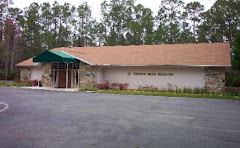
Donations of diapers began flowing in to the Diaper Bank in the synagogue’s facility at 40 Wellington Drive in Palm Coast. When nearly 1000 diapers of all sizes were collected, the announcement went out to mother’s groups and others that diapers are available to recipients of food stamps, participants in the Supplemental Nutrition Assistance Program, WIC or similar programs. Other applicants will be reviewed on an individual basis.
Diapers are available for distribution by appointment by calling 386-445-3006 or at the synagogue on Wednesdays from 1 until 3 p.m. Donations of diapers are accepted anytime. Cash donations will be used for the purchase of diapers. The Diaper Bank is run entirely by volunteers. Temple Beth Shalom provides the space for storage and distribution of the diapers and the charitable status under Internal Revenue Code Section 501 c 3. Thus, contributions may be tax-deductible, consultation with a qualified tax advisor is highly recommended!

Wednesday, May 6, 2009

St. Johns Riverkeeper To Address Temple Annual Spaghetti Dinner May 17


St. Johns Riverkeeper Neil Armingeon will be the featured guest speaker at Temple Beth Shalom Men’s Club Annual Spaghetti Dinner, Sunday, May 17th, 5 p.m. at the Palm Coast Synagogue, 40 Wellington Drive, off Pine Lakes Parkway. Armingeon and Riverkeeper are the full-time advocates and “watchdogs” for the St. John River watershed and the public to whom it belongs. The role of the Riverkeeper organization has become central in the “water wars” that are expanding following a permit issued to Seminole County to withdraw water from the St. Johns for irrigation use. This decision impacts many different areas, but especially the residents of the regions surrounding the St. John, including Flagler County.

Neil Armingeon previously served as the Environmental Director of the Lake Pontchartrain Basin Foundation in New Orleans. For over 10 years, he galvanized diverse coalitions of citizens in support of a clean, sustainable Lake Pontchartrain Watershed and developed and directed grass-roots campaigns that integrated science, advocacy, and public policy. Prior to his work with the Foundation, Neil was Project Director for the North Carolina Coastal Federation, one of the state's largest environmental groups, where he directed advocacy and hands-on regulatory education programs. Neil has a Bachelor of Science degree from North Carolina State University and a master's degree in Environmental Management from Duke University. He has become a major advocate for the protection of the integrity and the beauty of the St. Johns River.

The group St. Johns Riverkeeper is a private non-profit 501(c)(3) organization that serves as a full-time advocate and "watchdog" for the St. Johns River, its watershed, and the public to whom it belongs.Riverkeeper works to improve water quality in the St. Johns River and its tributaries, to protect critical habitat in the St. Johns River watershed, to provide meaningful public access to our waterways, and to educate our members and the public about the River and the issues that impact its health.Riverkeeper is a membership-based organization. Riverkeeper does not receive any government funding but must rely on the generous support of businesses and concerned citizens that recognize the value and importance of the St. Johns River and our work to protect it.
The Temple Beth Shalom Men’s Club Spaghetti dinner, Sunday, May 17th at 5 p.m. is open to the public; tickets must be purchased in advance through the synagogue office or at the door. The cost is $10 for adults. Children accompanied by an adult are free! For further information and for tickets contact Temple Beth Shalom at 386-445-3006.

Sunday, April 12, 2009

The "Once Every 28 Year" Mitzvah Celebrated by Beth Shalom


From the Daytona News Journal


April 09, 2009
Special sunrise
Jews believe every 28 years the sun returns to the spot it occupied on the 4th day of creation
By KARI COBHAM Staff Writer
FLAGLER BEACH -- "I think it's coming," a woman says.
The huddled group moves instinctively toward the wooden rail as the sun's rays break pink and orange over the frigid Atlantic Ocean. Numb hands clutch at prayer sheets.
"I haven't seen the sunrise in a long time so I might as well see this one; it's a special one," says Philip Barish, a Flagler Beach retiree and Palm Coast Temple Beth Shalom member.
At daybreak Wednesday, similar scenes unfolded worldwide, as many devout Jews gathered to observe Birkat HaChama or the Blessing of the Sun.
The ancient ritual comes just once every 28 years -- perhaps three times in a lifetime -- and marks the moment observers say the sun returns to the spot in the sky it occupied on the fourth day of creation.
"Often to us in these modern times, there's this ancient association of the sun with power," said Rabbi Merrill Shapiro of the conservative Wellington Drive synagogue.
About 20 of its members gathered in the dim morning light on Flagler Beach. Over in Ormond Beach, members stood outside the Esformes Chabad Center after a 7:30 a.m. service to acknowledge the moment.
"Sun is one of God's creations and definitely there's something to be grateful to witness," said Rabbi Pinchas Ezagui, spiritual leader at the center. "It's very emotional."
This year's observance holds special significance because it happens to coincide with Passover, Shapiro said.
The weeklong Jewish festival celebrates the deliverance of the Jewish people from Egyptian slavery and commemorates God sparing them from a plague that killed the firstborns of Egypt.
"What this year and this era holds for us, we cannot know, but we know that that makes it important," Shapiro said.
But other area synagogues, some of which hadn't heard of the Blessing of the Sun, bypassed the somewhat obscure tradition to focus on the Passover celebration.
"In the total scheme of things, this is an interesting idea and certainly it does have the makings of a strong ecological message," said Rabbi Barry Altman of the reform Temple Beth-El in Ormond Beach.
Conservative Congregation B'Nai Torah in Ormond Beach also did not observe the blessing. Temple Shalom of Deltona members recognized it individually, treasurer Ellen Korn said.
Not all Jewish denominations teach about the tradition and because it doesn't come often it's not "top of mind," Shapiro said.
Flagler Beach retiree Barish arrived in the Wednesday morning cold clutching a cup of steaming liquid. This Birkat HaChama will likely be his last, the 74-year-old grudgingly admitted.
"I hate to think of it that way, but it comes with the territory," Barish said.
Abraham Fortun, a ninth-grader at Flagler Palm Coast High School, went mostly because his dad made him.
"I've also never seen a sunrise before," said Abraham, 14, his bespectacled face barely visible beneath a tightly drawn gray hoodie.
Shapiro remembered joining 400,000 Jews 28 years ago at the Wailing Wall, watching the sun come up over the gold Dome of the Rock in Jerusalem with his wife and two children. He was 34 years old then, 62 now.
"We're all sure that the sun will rise tomorrow, but what would happen if it didn't?" Shapiro said. "This is God manifest in our world."

www.staugustinejewishhistoricalsociety.wordpress.com

Sunday, April 5, 2009

Florida Fair Elections Center Executive Director Susan Pynchon to speak at April 19th Men's Club Breakfast


Florida Fair Elections Center Executive Director Susan Pynchon, a nationally recognized election reform and voting rights advocate will address a new initiative to end election district gerrymandering in the State of Florida at the a Temple Beth Shalom Men’s Club Breakfast on Sunday, April 19th at 10 a.m. The meeting is open to all and includes an elaborate breakfast. A $12 donation is requested. The public is urged to attend. Reservations can be made through the synagogue office at 386-445-3006.

For many years, Pynchon has monitored, researched, and wrote reports on various elections and election problems around Florida, including special reports on elections in Volusia County, Flagler County, and Sarasota County. She has made numerous trips to Tallahassee to speak on election-related issues before the Ethics and Elections Committees of the Florida House and Senate; advocated for verifiable paper-ballot elections in Washington D.C. and Tallahassee; studied election law and election “best practices.” Pynchon personally initiated and sponsored Florida’s first statewide election reform conference, which has become an annual event. She regularly gives talks to community organizations throughout Florida to help educate Floridians about the problems with electronic voting, partisan election administration, and other reform issues.


Susan Pynchon co-founded the Florida Voters Coalition; served as a member of the Election Protection Coalition; and served on the Advisory Board of VoteTrustUSA. She has been Interviewed frequently by local, state, and national news media on election-related issues, including CNN, the Wall Street Journal, the Daytona Beach News Journal, the DeLand Beacon, and the Orlando Sentinel; appeared in the Emmy-nominated documentary Hacking Democracy.


Pynchon is well-known for having forged cooperative relationships with established civil rights organizations to monitor proposed legislation on the state and national level and to advocate for needed election reforms. She Initiated the preservation of Florida election records, which would otherwise have been destroyed, for the 2000, 2004 and 2006 elections so that historians and researchers will forevermore have access to those records.


Susan Pynchon was the recipient of the 2008 Nelson Poynter Civil Liberties Award, Florida ACLU The Nelson Poynter Civil Liberties Award has been presented for 29 consecutive years to an individual or group of individuals who have made an outstanding contribution to the advancement of civil liberties. The award is named for the former crusading editor of the St. Petersburg Times, who was never afraid to stand up for unpopular causes. He fought racial segregation, defended the right of a free press, exposed corruption in government and supported the rights of the elderly and the poor. He also led the fight for the Sunshine Law, opening Florida’s government to public scrutiny and accountability. The first recipient of the Nelson Poynter Civil Liberties Award was the late Florida Governor LeRoy Collins in 1978, who was recognized for his courageous leadership in upholding racial justice and opposing the death penalty. Other recipients have included Florida Supreme Court Justice Gerald Kogan; Florida Bar Association President Chesterfield Smith; Immigrant Rights Attorney Cheryl Little; and, in 2007, author and columnist Carl Hiaasen.Together with three colleagues, I received the 2008 Nelson Poynter Civil Liberties award for “defending voting rights in Florida,” which included rallying diverse organizations across Florida in the successful push for statewide implementation of verifiable paper ballot voting systems in 2007 and other election reforms.


Susan Pynchon's Educational background:American College, Paris, France – one year; Liberal ArtsEckerd College, St. Petersburg, FL – two years; Liberal ArtsUniversity of Maine, Augusta, Maine – one year; Liberal ArtsUniversity of New Hampshire, Durham, NH – Business MathTechnical training: Honeywell, Inc., Minneapolis, MN Election Conferences: Washington, DC; San Francisco, CA; Minneapolis, MN; Kissimmee, FL; DeLand, FL;

Wednesday, April 1, 2009

Area Jews Gather to Greet the Rising Sun of Creation in Flagler Beach, Wednesday, April 8th

Members of the local Jewish community who do not avail themselves of the opportunity to greet the rising sun of Creation, Wednesday morning, April 8th need not be concerned. They’ll have another chance to do it again on Wednesday, April 8th in 2037! Once every 28 years, the Sun returns to the position it occupied when it was created at the beginning of the fourth day of creation as described in the opening chapter of the book of Genesis:
And God made the two great lights: the greater light to rule the day, and the lesser light to rule the night and the stars. And God placed them in the sky of the heavens to give light on the earth, and to rule over the day and over the night, and to divide the light from darkness; and God saw that it was good. And it was evening and it was morning, a fourth day.
A two thousand-year-old tradition calls upon Jews to institute a special prayer acknowledging God's might and creation of the world. This ritual is known as The Blessing on the Sun, or, in Hebrew, Birkat HaChamah.

The local Jewish community organized under the auspices of Palm Coast’s Temple Beth Shalom under the leadership of Rabbi Merrill Shapiro will gather just north of the Flagler Pier at 6:45 a.m. on Tuesday, April 8th. For tradition also prescribes that one should rush to fulfill the commandment and complete the ritual as soon as possible, in this case as the sun rises on the fourth day of the week, on a Wednesday during spring’s Hebrew month of Nisan.
“The calculations are complex,” explains Rabbi Merrill Shapiro, “but accessible. Anyone wishing to go through them can and they are readily available. But the mystical meaning is equally important. The teachers of Kabballah, of Jewish mysticism, noted the significance of the 28-year cycle of the sun and its relation to the powers and abilities of human beings. It is as if a sun-human being connection is being created bring warmth, strength and power to the world.”
This sun-human connection is significant, others say, as we here on earth learn to harness the power of the sun to power our electric grid and the needs of a modern world. Floridians, of all of America’s citizens, have the greatest connection with the sun. And the cycle of the sun and the cycles of women make them especially tuned to the actions of the heavens.
All of these elements will be addressed at the brief service that welcomes the new sun cycle to begin April 8th. All are welcome to attend, just north of the Flagler Pier at 6:45 a.m. The day is significant for after greeting the sun, Jews the world over will prepare to celebrate the Passover that same evening, recognizing that the sun provides warmth and strength for all and that no person can enslave another!